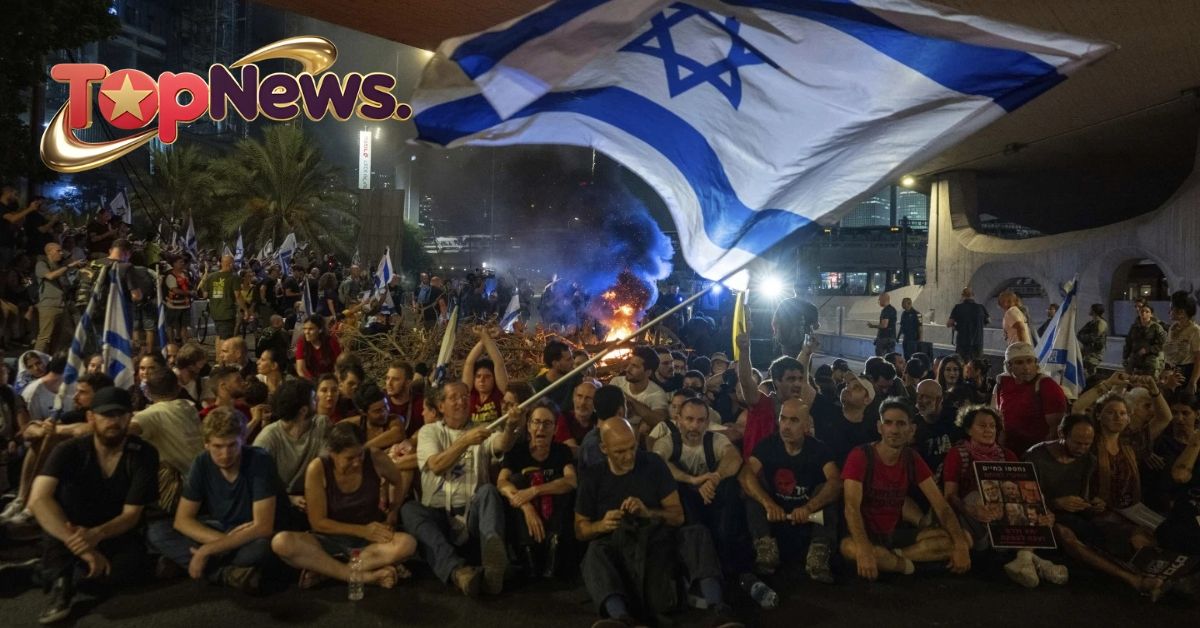
From the vibrant streets of Tel Aviv to the southern city of Eilat, tens of thousands of Israelis took to the streets in one of the most significant nationwide protests since the start of Israel’s war with Hamas.
The protesters are demanding that Prime Minister Benjamin Netanyahu secure a ceasefire-for-hostages deal, amid growing frustration over his handling of the negotiations.
Israel faces growing unrest as hostage deaths
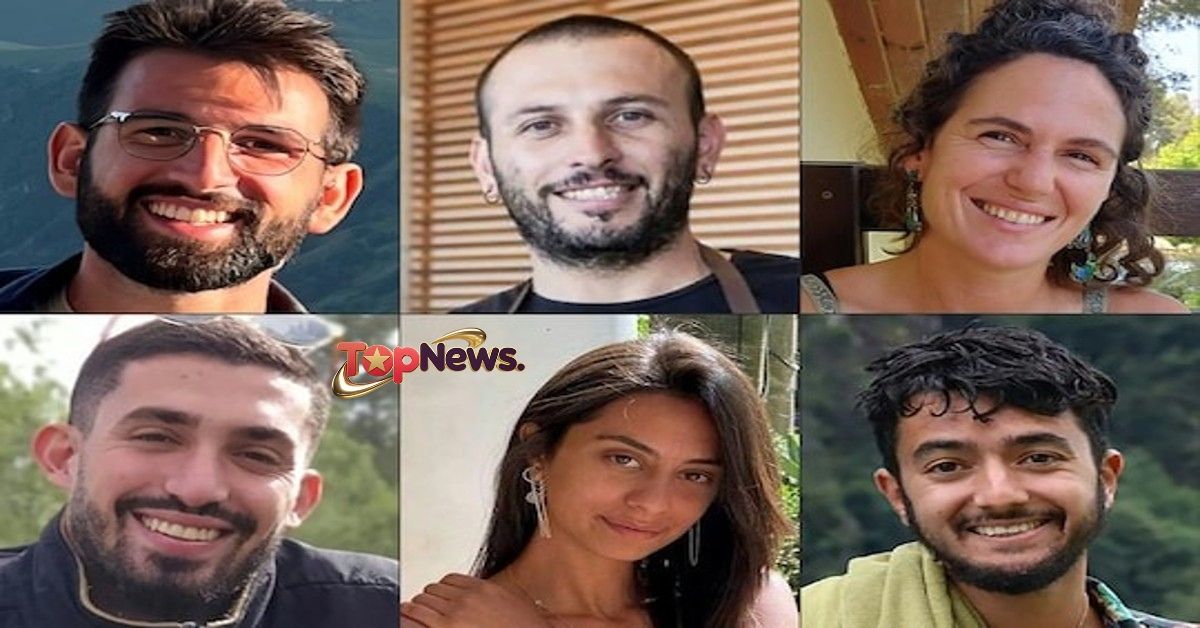
The anger against Netanyahu reached a boiling point on Sunday, following the grim news that another six hostages had been found dead in Gaza. This development has intensified criticism from hostage families and their supporters, who accuse Netanyahu of stalling efforts to finalize a deal.
In response to the escalating frustration, Israel’s largest labor union announced a general strike set for Monday and warned of a potential shutdown of the entire Israeli economy.
As of early Monday, the full impact of the strike remains uncertain, but supporters have promised a significant national response.
Israeli officials revealed that three of the six deceased hostages, including Israeli-American Hersh Goldberg-Polin, had been expected to be released in a potential ceasefire agreement. Autopsies indicated they had been shot at close range either on Thursday or Friday morning. Israeli forces announced the recovery of their bodies from an underground tunnel in Rafah on Saturday, further fueling public outrage.
“Unforgivable”: Israelis protest in the streets over the government’s handling of the hostage crisis
The disturbing details of their deaths have sparked widespread anger across the country. Protesters have been blocking highways, waving Israeli flags, and chanting “We won’t abandon them” in reference to the more than 100 hostages, including 35 believed to be dead, still held in Gaza. Most of these hostages were captured during Hamas’ October 7 attack, which resulted in the deaths of approximately 1,200 people and the capture of more than 200 individuals.
In Tel Aviv, demonstrators set up a mock cemetery and carried signs accusing Netanyahu of being responsible for the hostages’ deaths. The protesters’ anger was palpable as they expressed their frustration with the prime minister’s handling of the crisis.
Later in the evening, Israeli police used stun grenades against protesters who were blocking the Ayalon highway. Verified video footage shows that the grenades were deployed without prior warning. Naama Lazimi, a member of Israel’s parliament who was at the demonstration, reported on X that the use of stun grenades was sudden and unexpected.
In addition, Israeli police employed a water cannon against the protesters on the highway, prompting chants of “Officer, who are you keeping safe?” from the demonstrators. This aggressive response from the authorities has only heightened the tension and frustration among the protesters.
Police arrested 29 individuals in the city, charging them with vandalism, disorderly conduct, and assaulting officers.
The Hostages and Missing Families Forum reported that at least 700,000 people participated in protests across Israel, with around 550,000 of them gathered in Tel Aviv. CNN has not independently verified these numbers and has requested an estimate of the crowd size from Israeli police.
In Tel Aviv, the atmosphere was highly charged. Many protesters shouted “sorry” as the names of the six deceased hostages were announced over a loudspeaker. Organizers described the protest as the largest since the beginning of the war.
One protester told CNN she attended to support her cousin, whose body was returned by the Israel Defense Forces (IDF) overnight. “I come here every week to show her father and other families that we are with them,” she said. “And on the other side, we are deeply angry with the government. Their actions are unforgivable.”
In Jerusalem, demonstrators called for Netanyahu’s resignation while the government conducted a cabinet meeting. Eden Kramer, who joined the rally with her toddler in a stroller, expressed her concern for the future. “We hope everyone will come out today to send a message to the government: We can’t continue like this,” she said.
The contract is questionable

The discovery of the six hostage bodies has cast doubt on the viability of the ongoing negotiations.
Skepticism has increased regarding Netanyahu’s willingness to finalize a deal due to strong opposition from far-right ministers within his coalition. The Israeli Prime Minister’s political survival is heavily reliant on these far-right allies, several of whom have already threatened to leave the government, which could lead to its collapse, if he proceeds with the deal.
During a cabinet meeting on Sunday, Israeli Defense Minister Yoav Gallant criticized the government for allegedly prioritizing control of the Philadelphi corridor—a key border area—over reaching a deal to free the hostages. He labeled this stance as a “moral disgrace.”
The Philadelphi corridor, a 14-kilometer (8.7 mile) stretch along the Gaza-Egypt border, is currently under Israeli Defense Forces (IDF) control. The placement of Israeli troops in this area has been a major sticking point in ceasefire discussions with Hamas, which demands their withdrawal.
Netanyahu argues that maintaining control over the corridor is crucial to preventing Hamas from resuming arms smuggling through the tunnels beneath it.
Gallant, who has increasingly felt isolated within Netanyahu’s cabinet over the hostage deal, cautioned his colleagues on Sunday that “if we keep going down this path, we won’t achieve the goals we’ve set for ourselves.”
He added, “If we want the hostages to stay alive, we’re running out of time.”
A senior US official stated that the recent killings of the hostages raised doubts about Hamas’s commitment to the deal, especially since three of the hostages were scheduled to be released as part of the ceasefire agreement.
The official noted, “US officials had been finalizing a package with Qatar and Egypt that included Hersh (Goldberg-Polin) and several hostages who were just executed.”
“This casts doubt on Hamas’s seriousness about reaching an agreement, while also increasing pressure on Israel and Netanyahu personally.”
A source familiar with the ceasefire talks told CNN that it is unclear how the killings will impact the negotiations, with any effects likely to become apparent in the next day or two.
The source described the situation as “complicated” and noted that while there are currently no in-person joint negotiations, discussions continue through regular channels.
US President Joe Biden and Vice President Kamala Harris are scheduled to meet with the US negotiating team in the Situation Room on Monday, according to the White House.
In a worsening crisis

In a rapidly deteriorating situation, Israel’s far-right Finance Minister Bezalel Smotrich has urged the country’s attorney general to seek urgent injunctions to block the planned nationwide strike scheduled for Monday.
In a letter to Attorney General Gali Baharav-Miara, Smotrich contended that the strike would harm the economy during wartime and set a troubling precedent. The attorney general’s office has not yet responded to the request.
Smotrich had previously directed the finance ministry’s salary department to notify that anyone participating in Monday’s strike would not receive their pay.
Arnon Bar-David, chairman of Israel’s largest trade union, Histadrut, warned on Sunday that the nation is “in a downward spiral, and we keep receiving body bags.”
Bar-David, who called for the strike, announced at a press conference that “only a strike would make an impact, and that’s why I’ve decided that starting tomorrow at six in the morning, the entire Israeli economy will come to a halt.”
He also stated that the strike would include a shutdown of Ben-Gurion Airport. However, Ben-Gurion Airport has announced it will remain “open for flights and landings on Monday, September 2.”
The Hebrew University of Jerusalem has pledged to join the strike, describing it as a “response to the tragic murder of our student Carmel Gat, along with five other Israeli hostages.”
Gat, a 40-year-old occupational therapist, was abducted by Hamas from her parents’ home in the border kibbutz of Be’eri in southern Israel on October 7.
A university spokesperson mentioned that the strike’s impact would be broader than previous actions taken since the beginning of the war, such as a partial strike in June.